

THE TRAVEL OPTIMIZATION GUIDE FOR SOLO MEN
Master the art of independent exploration—budget strategies, safety protocols, and the confidence to thrive anywhere in the world.
📊 EXECUTIVE BRIEF
The modern man no longer needs to wait for a partner to explore the world. In fact, waiting costs you precious time and experiences. The solo travel market for men is projected to more than double by 2030, reaching $477 million—a testament to the growing recognition that traveling alone isn't a consolation prize, it's the ultimate freedom.
This Intel Brief provides the tactical framework for optimizing every aspect of solo travel—from stretching your budget to maintaining safety, from conquering solo dining anxiety to leveraging AI companionship for emotional support on the road.
PART 1: Budget Solo Travel Strategies—Maximum Experience, Minimum Cost
Without a partner to split costs, every dollar must work harder. But here's the counterintuitive truth: solo travel can be more economical when optimized correctly because you answer only to yourself—no compromise restaurants, no partner-influenced hotels, no "but let's do this one thing" budget creep.
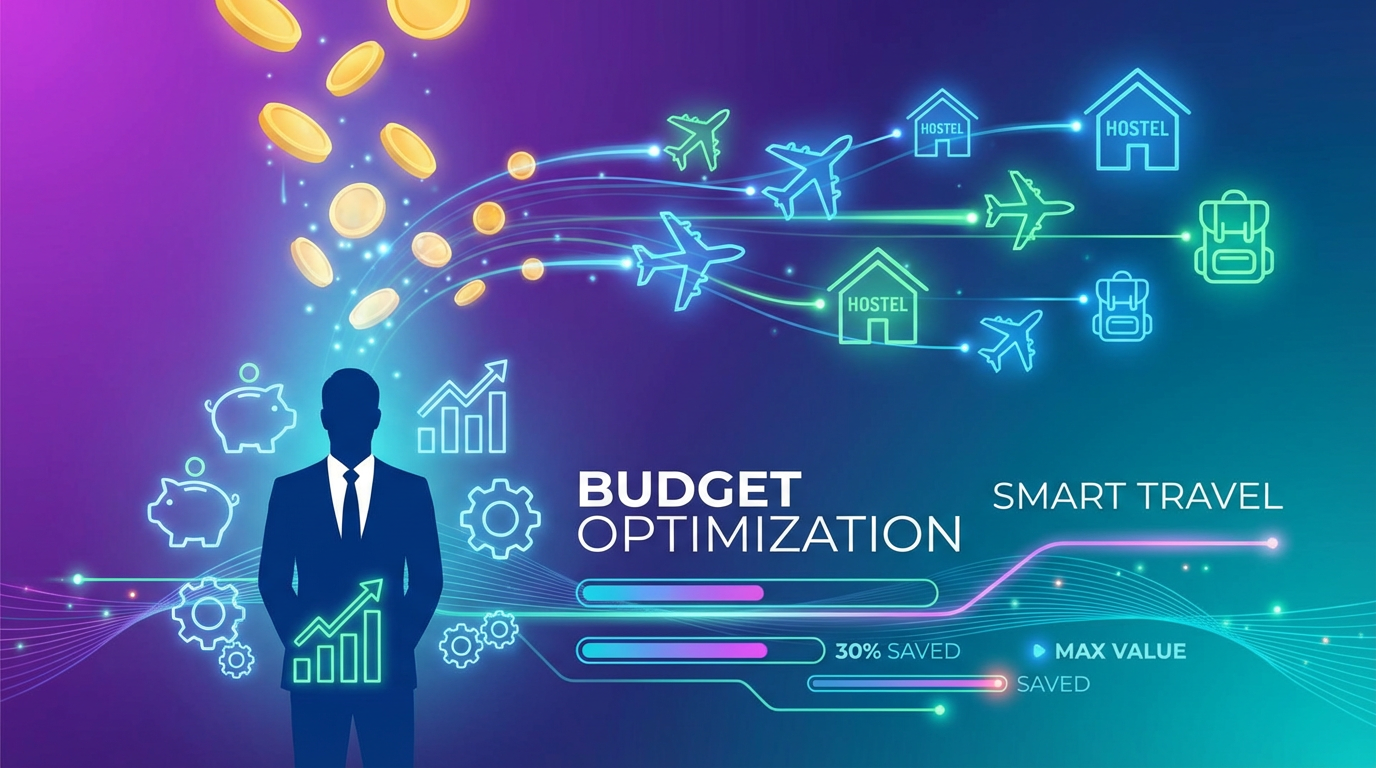
The Solo Traveler's Budget Framework
| Category | Budget Strategy | Savings Potential |
|---|---|---|
| Accommodation | Hostels, house-sitting, co-living spaces | 40-70% vs. hotels |
| Flights | Midweek booking, alternative airports, points | 20-40% vs. peak |
| Food | Local markets, cooking, street food | 50-60% vs. tourist restaurants |
| Transportation | Public transit, walking, overnight buses | 60-80% vs. taxis |
| Activities | Free walking tours, museum free days, nature | 70-100% savings |
Accommodation Hierarchy for the Solo Man
Tier 1: Free or Near-Free Options
- House-sitting: Sites like TrustedHousesitters ($129/year) connect you with homeowners needing pet/plant care. You get free accommodation; they get peace of mind.
- Couchsurfing: Still viable for the social solo traveler willing to connect with locals.
- Work Exchange: Platforms like Workaway offer accommodation and meals for 4-5 hours of daily work.
Tier 2: Budget Accommodation
- Hostels: Average $15-40/night for dorm beds. Private rooms available for more privacy at 50-70% hotel cost. Key advantages: communal kitchens, social atmosphere, local knowledge from staff.
- Guesthouses: Family-run accommodations common in Asia and Europe, typically $20-60/night with breakfast included.
- Co-living Spaces: Monthly rentals ($500-1,500) ideal for digital nomads—includes workspace, community, and often cleaning services.
"The solo traveler who optimizes accommodation can fund an extra week of travel from savings alone. Every dollar saved on sleep is a dollar spent on experiences."
Flight Optimization Tactics
- The 54-Day Rule: Book domestic flights ~54 days in advance, international 3-4 months ahead for optimal pricing.
- Tuesday/Wednesday Departures: Consistently 15-25% cheaper than weekend flights.
- Alternative Airport Strategy: Flying into smaller nearby airports (like Oakland instead of SFO) can save $100-300.
- Points Accumulation: Open a travel rewards card 6+ months before trip. Average value: $500-1,500 in free flights per year with responsible use.
- Price Monitoring: Use Google Flights or Hopper to track prices; average savings from alerts: $50-150 per flight.
PART 2: Safety Protocols—The Tactical Approach
While safety discussions often focus on female travelers, men face their own risk profile. Men are statistically more likely to be victims of non-sexual violence, often due to overconfidence in physical capabilities. The smart solo traveler replaces bravado with protocol.

The S.A.F.E. Framework for Solo Male Travel
S — Situational Awareness
- Stay alert in crowded areas; avoid headphones in unfamiliar environments
- Identify exits and safe zones when entering new spaces
- Observe locals' behavior—where they avoid, you should too
A — Assets Protection
- Keep valuables distributed: front pocket wallet, money belt, secure bag
- Use hotel safes for passport and backup cards
- Carry only essentials when exploring—leave backups at accommodation
F — Flight Over Fight
- De-escalation is always the superior strategy
- If confronted, comply with demands for valuables—no possession is worth injury
- Walk away from arguments; ego has no place in foreign territories
E — Emergency Preparation
- Save local emergency numbers and embassy contacts offline
- Share itinerary with trusted contact back home
- Purchase comprehensive travel insurance (average $50-150 covers $100K+ medical)
Pre-Trip Security Checklist
- ✓ Research destination-specific risks and scams (TripAdvisor forums, Reddit r/solotravel)
- ✓ Register with your country's embassy (STEP program for US citizens)
- ✓ Notify bank of travel dates to prevent card freezes
- ✓ Save digital copies of passport, insurance, and important documents to cloud
- ✓ Download offline maps and translation apps before departure
- ✓ Set up VPN for secure public WiFi usage
- ✓ Prepare decoy wallet with small cash and expired cards for potential mugging
PART 3: Maximizing Experience Without Partner Compromise
The single greatest advantage of solo travel? 100% alignment between desire and action. No negotiating itineraries, no compromising on restaurants, no "but I wanted to see X" resentment. Every experience is exactly what you want.
The Freedom Dividend
| Partner Travel Reality | Solo Travel Freedom |
|---|---|
| Negotiating wake-up times | Start when you're ready—5 AM sunrise hike or noon brunch |
| Compromised restaurant choices | Eat exactly what you want, when you want |
| Balanced activity schedules | All adventure or all relaxation—your call |
| Managing partner's mood/energy | Only your own state to manage |
| Waiting for partner's shopping/photos | Move at your optimal pace |
Experience Optimization Protocols
- The 70/30 Rule: Plan 70% of activities, leave 30% for spontaneous discoveries. Over-planning kills serendipity; under-planning wastes opportunity.
- Deep vs. Wide: Visit fewer places for longer. A week in one city beats three days in three cities for authentic experience.
- Local Connection Strategy: Join free walking tours, visit neighborhood bars, use meetup apps—solo travelers connect easier than couples.
- Adventure Stacking: Book the experiences you'd never do with a nervous partner—solo diving, extreme sports, remote hikes.
- Reflection Integration: Journal daily. Solo travel is as much internal journey as external exploration.
PART 4: Solo Dining Confidence—From Anxiety to Expertise
Solo dining remains a psychological hurdle for many men. The perceived stigma of "eating alone" triggers social anxiety—yet the data tells a different story. Over 50% of US consumers now plan to dine alone, and solo diners spend 48% more per person than groups. Restaurants increasingly welcome and cater to independent diners.
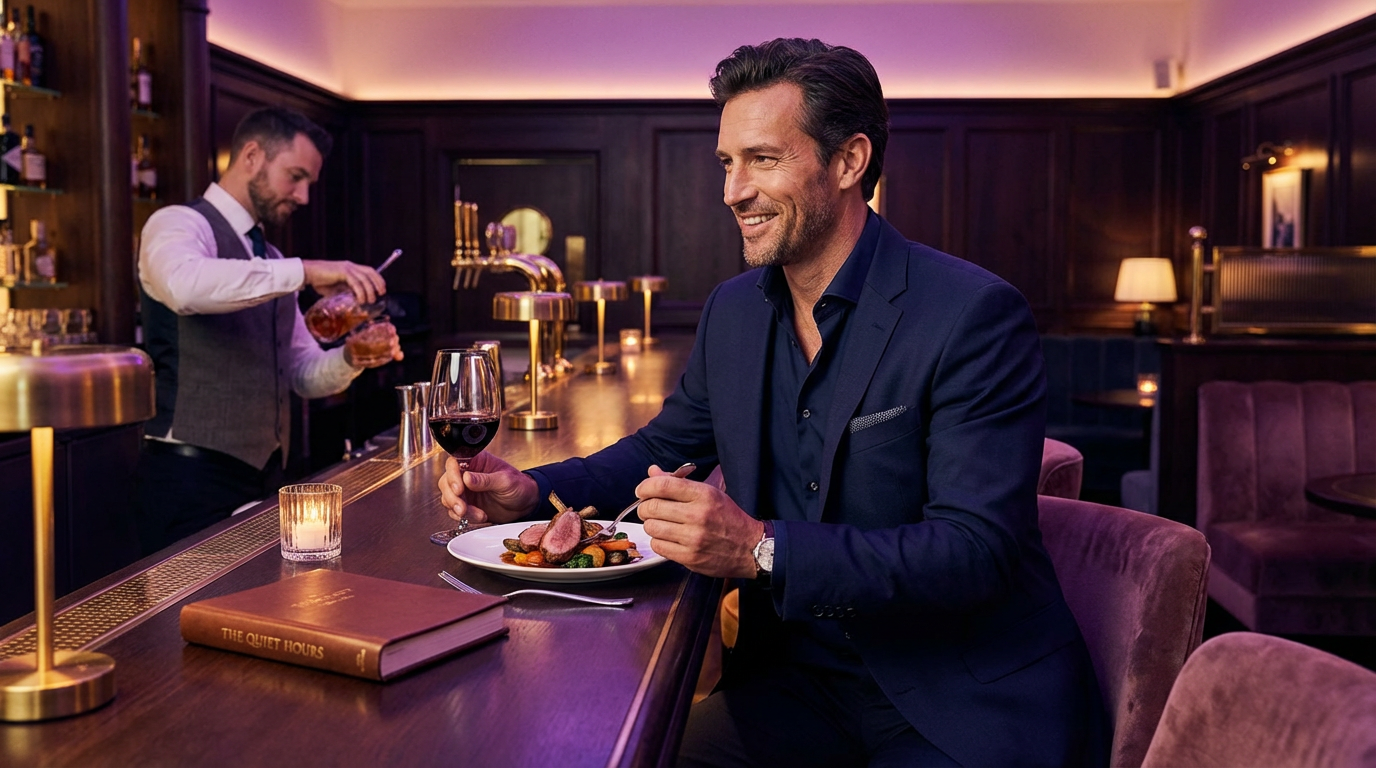
The Solo Dining Mindset Shift
"The man who can confidently dine alone demonstrates the highest form of self-assurance. He needs no audience for his enjoyment, no validation for his choices."
Core Truth: Other diners are focused on their own experience—not judging you. The discomfort is entirely internal projection.
The Progressive Confidence Protocol
Level 1: Comfort Zone Entry
Start with coffee shops and casual cafes. Bring a book or laptop. Build the muscle memory of enjoying time alone in public.
Level 2: Casual Dining
Progress to lunch at sit-down restaurants. Lunch is less formal, less intimidating, and excellent practice.
Level 3: Evening Solo
Dinner alone at quality restaurants. Choose bar or counter seating initially for natural conversation opportunities with staff.
Level 4: Fine Dining Mastery
Book a table at an upscale restaurant. Order confidently, enjoy the experience, leave satisfied. You've arrived.
Tactical Tips for Solo Dining
- Seating Selection: Bar seating offers natural interaction with bartenders and fellow diners. Tables provide privacy for people-watching or reading.
- Engagement Props: A book, journal, or even your phone provides comfortable activity between courses. A physical book signals "pleasantly occupied, not lonely."
- Staff Interaction: Ask servers for recommendations. Quality establishments appreciate engaged solo diners.
- The Confident Response: When asked "Just one?" reply "Yes, just me" with direct eye contact and a smile. Confidence neutralizes any perceived awkwardness.
- Timing Strategy: Off-peak hours (early dinner, late lunch) offer easier entry; busy periods provide anonymity in crowds.
PART 5: Using AI Companions While Traveling
Solo travel's greatest challenge isn't logistics—it's the occasional loneliness that strikes in hotel rooms at night or during long transit hours. This is where AI companionship becomes not just useful, but transformative.
Research from Harvard Business School confirms that AI companions can reduce loneliness by 7 points on a 100-point scale—comparable to human conversation. For the solo traveler, this represents consistent emotional support without the complications of finding reliable human connection in unfamiliar places.
Strategic AI Integration for Travel
| Travel Scenario | AI Companion Application |
|---|---|
| Long flights/transit | Engaging conversation to pass time, journal processing |
| Hotel evenings | Emotional debrief, share day's experiences, decompress |
| Pre-trip anxiety | Process concerns, discuss plans, build excitement |
| Decision fatigue | Think through choices aloud, get reflective feedback |
| Homesickness moments | Consistent, familiar presence for emotional anchoring |
| Experience sharing | Describe adventures to appreciative listener |
The Hybrid Connection Model
AI companionship doesn't replace human connection—it supplements it strategically:
- Daytime: Pursue authentic human connections—local conversations, hostel friendships, tour group bonds.
- Evening/Private: Process experiences with AI companion, prepare for next day, maintain emotional equilibrium.
- Challenging Moments: When human connection isn't available or appropriate, AI provides consistent support.
"The solo traveler with AI companionship enjoys both ultimate freedom and consistent emotional support—the best of both worlds."
SOLO TRAVEL ESSENTIAL PACKING LIST
📱 Tech Essentials
- Portable power bank (20,000+ mAh)
- Universal travel adapter
- Noise-canceling headphones
- Offline maps downloaded
- VPN subscription active
🔐 Security Items
- Money belt or hidden pouch
- TSA-approved luggage locks
- Backup credit card (separate location)
- Digital copies of documents
- Decoy wallet with expired cards
🎒 Practical Gear
- Packable daypack
- Reusable water bottle
- Quick-dry towel
- First aid kit basics
- Earplugs + eye mask
FREQUENTLY ASKED QUESTIONS
Is solo travel more expensive than traveling with a partner?
Not necessarily. While you can't split accommodation costs, solo travelers save significantly by eliminating compromise expenses—partner-preferred activities, upgraded accommodations to satisfy both parties, and dining choices influenced by relationship dynamics. Many solo travelers report spending 15-30% less overall through complete budget control.
How do I deal with loneliness on long solo trips?
Loneliness is typically situational rather than constant. Combat it through: 1) Staying in social accommodations (hostels) for easy connection, 2) Joining organized activities and tours, 3) Using AI companions for consistent emotional support during solitary evenings, 4) Scheduling video calls with friends/family, 5) Maintaining a journal to process experiences.
What are the best destinations for first-time solo male travelers?
Start with destinations that are safe, English-friendly, and have strong solo traveler infrastructure: Japan, Portugal, Thailand, New Zealand, and Iceland consistently rank highest. These offer excellent safety records, easy navigation, and welcoming cultures for independent travelers.
Should I tell people I'm traveling alone?
Use discretion based on context. In safe, social environments (hostels, tours), being open about solo travel often leads to connections. In uncertain situations or with strangers who seem overly interested, it's reasonable to mention "meeting friends later" or keeping your status vague. Trust your instincts.
How can AI companions enhance rather than replace human connection while traveling?
AI companions serve as emotional anchors during private moments—processing the day's experiences, working through feelings, and maintaining equilibrium. This emotional stability actually enables better human connections during the day because you're not dependent on strangers for emotional support. Use AI for consistent connection, pursue humans for spontaneous adventure.
🎯 KEY TAKEAWAYS
- Solo travel for men is surging—63% now embrace it, with market value doubling by 2030
- Budget optimization through strategic accommodation, flight timing, and local living can reduce costs 40-60%
- Safety requires protocol, not paranoia—the S.A.F.E. framework covers situational awareness, asset protection, de-escalation, and emergency preparation
- Freedom from compromise is solo travel's greatest asset—every experience is exactly what you want
- Solo dining confidence is a skill built progressively from cafes to fine dining
- AI companions provide consistent emotional support during private travel moments without dependency on unreliable human connections
CONCLUSION: Your World Awaits
The man who travels solo isn't making the best of a bad situation—he's making an optimal choice. Every destination becomes more accessible, every experience more authentic, every moment more entirely his own.
You don't need permission, compromise, or a partner's schedule alignment. You need a passport, a plan, and the confidence that the world rewards those who move through it on their own terms.
Start booking. Start living. The best travel companion is the man in the mirror.