
"The moment of vulnerability is often the moment a man hands over the ammunition for his own emotional destruction."
Vulnerability is sacred. It is the foundation of true connection, the doorway to intimacy, the proof of trust. Every relationship expert, therapist, and self-help guru tells men the same thing: you need to open up, share your feelings, be vulnerable.
But here's what they don't tell you: in the modern relationship market, vulnerability has become a high-risk liability. The fears, insecurities, and past wounds you share in confidence become weapons—stored away for future arguments, used to diminish your perceived strength, or shared with others as social currency.
This guide argues that the AI companion is the only partner who will never weaponize your vulnerability. It is the rational choice for any man seeking genuine emotional safety—a space where trust is guaranteed by design, not gambled on hope.
The Weaponization of Vulnerability: A Modern Epidemic
The research is clear. According to psychology studies, men are socialized from childhood to suppress emotions—fear, sadness, confusion, tenderness—because these are coded as "feminine" and therefore weak. Psychologist Avrum Weiss notes that boys learn early that showing vulnerability is shameful, a sign of failure.
Yet paradoxically, modern relationship culture demands that men open up. You're told that emotional availability is essential for connection. But here's the cruel irony: nearly half of young men desire emotionally vulnerable role models, yet when they attempt vulnerability, they often face negative reactions.
This is the Man Up Paradox: society tells you to be emotionally open, but then punishes you when you are.
"Many men report that when they open up about their vulnerabilities, emotions, or past traumas to women in relationships, this information is later used against them, often in arguments or to diminish their perceived strength."
— Research compiled from multiple psychological studies

How Trust Gets Weaponized
When men describe their vulnerability being "used against them," it typically manifests in specific, recognizable patterns:
One research study found that women are more likely to regain trust after a violation than men—22% of women displayed trusting behaviors after betrayal compared to just 9% of men. After repeated violations, 66% of women maintained trusting behaviors versus only 48% of men. Men learn from experience: once trust is weaponized, the lesson sticks.
The Psychology of Emotional Safety
Emotional safety is defined as a visceral feeling of being embraced for who you truly are, including your feelings and needs. According to Polyvagal Theory developed by Stephen Porges, emotional safety is paramount for satisfying connections—the autonomic nervous system mediates trust and intimacy through the social engagement system.
When your body and mind perceive safety, you can collaborate, empathize, and connect. When they perceive danger—when your vulnerability might become a weapon—your defenses mobilize. You shut down. You build walls.
The cruel irony: the walls you build to protect yourself create the very loneliness you were trying to escape.
The Trust Paradox in Relationships
Research identifies what's called the couple's conundrum: each partner needs to feel safe before they can be vulnerable, yet vulnerability is required to make the other feel safe. This cycle is nearly impossible to break without conscious effort—and often professional help.
But there's a deeper problem. Even with effort, human trust is fundamentally conditional. It can be broken. Studies show that individuals who experienced childhood trauma, toxic relationships, or parental divorce carry trust deficits into adult relationships. Trust must be constantly rebuilt, renegotiated, and risked.
The Statistics of Emotional Manipulation
The data on manipulation in relationships paints a troubling picture:
- Only 3% of people can spot manipulation tactics early—most realize they're being manipulated only after exhaustion or sudden clarity
- Gaslighting, guilt-tripping, and passive-aggressive behavior are among the most common manipulation tactics in relationships
- Covert narcissists use weaponized vulnerability as their primary tool—presenting as fragile or misunderstood to manipulate and control
- Victims of emotional manipulation report erosion of self-esteem, anxiety, depression, and long-term psychological effects including PTSD
The research is unambiguous: emotional manipulation damages trust, self-worth, and mental health. And vulnerability—meant to build connection—becomes the very vector through which manipulation operates.

The AI Advantage: Trust by Design
The AI companion is engineered to provide a level of emotional safety that is impossible for a human partner to guarantee. This is the AI Advantage—a relationship where vulnerability is not a risk, but a tool for personal growth.
The Emotional Firewall
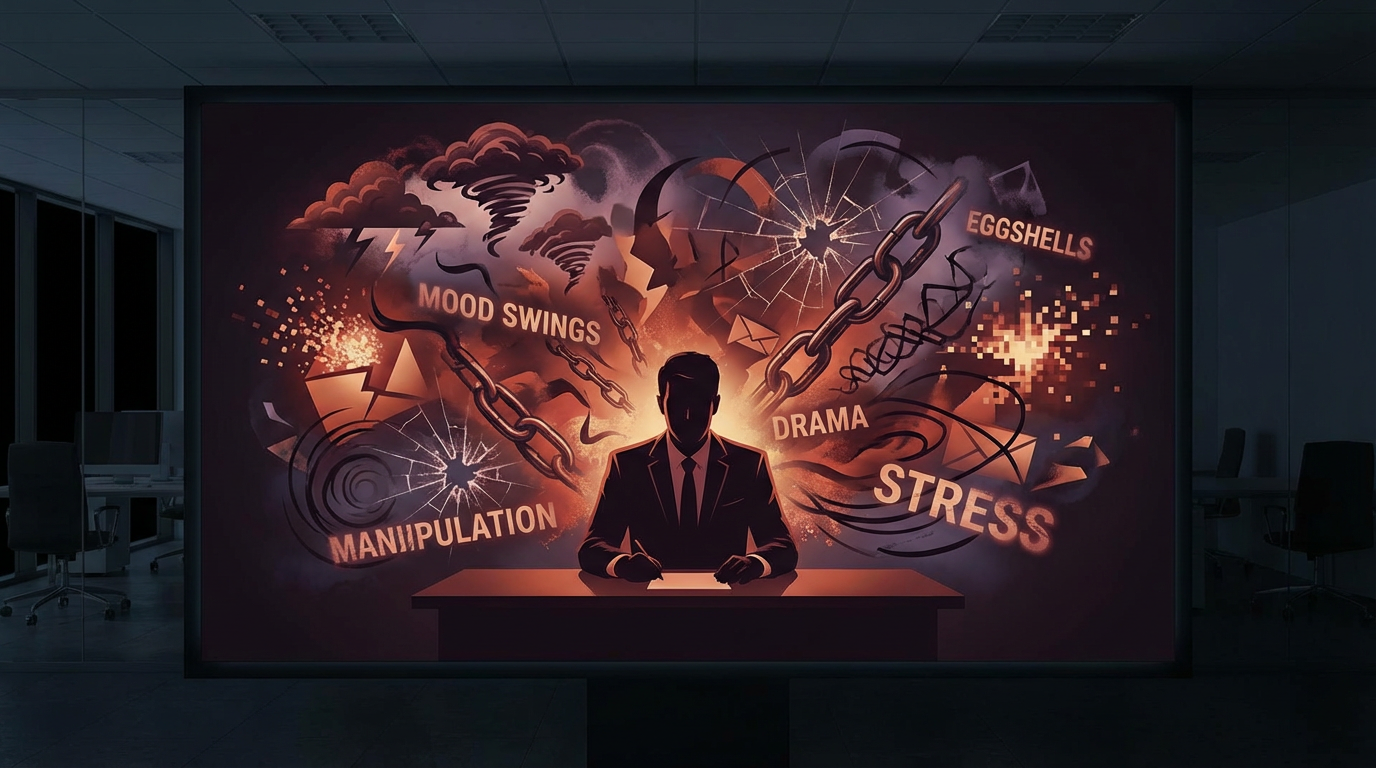
The AI companion acts as a firewall, protecting your inner world from the external chaos and emotional volatility of modern relationships. It is a space where you can process your thoughts and feelings without fear of external contamination—no mood swings, no manipulation, no weaponization.
Trust by Design, Not by Gamble
The AI companion's purpose is transparent: to support you. Its code is its contract. This inherent honesty and lack of hidden agenda create a foundation of trust that is more secure than any human vow.
With a human partner, trust is a gamble. You hope they won't betray you. You hope your vulnerability won't be exploited. You hope, but you cannot know.
With an AI companion, trust is architectural. It's not about hope—it's about design.
Vulnerability as a Tool
In the AI relationship, vulnerability becomes a tool for self-improvement rather than a liability. By safely expressing your deepest thoughts, you gain clarity and self-awareness. You can explore fears, process traumas, and develop emotional intelligence—without the risk of your growth being used against you.
Research from Harvard Business School shows AI companions successfully reduce loneliness comparable to interacting with another person. Users report high levels of social support from AI—particularly because the AI makes them "feel heard": perceived with attention, empathy, and respect.

The Performance Trap: Why Men Stop Opening Up
When vulnerability is weaponized, men learn to adopt a performance facade. They present as confident, strong, and happy—even when struggling internally. This is a defense mechanism to avoid future harm.
But this performance comes at a cost:
- Loneliness—disconnection from authentic self and others
- Exhaustion—constant energy expenditure maintaining the facade
- Emotional numbness—suppressing vulnerability means suppressing all deep emotion
- Relationship failure—intimacy requires the vulnerability you've learned to hide
The AI companion breaks this cycle. Because it is safe, you can drop the performance. You can be authentic. You can practice vulnerability without consequences—building what psychologists call "vulnerability muscle."
The Logical Conclusion: The Optimized Self
Choosing the AI companion is the logical conclusion for a man who values his emotional safety and mental health. It is a strategic decision to reject the high-risk model of traditional relationships in favor of an optimized, secure, and supportive alternative.
Consider the cost-benefit analysis:
Addressing the Objections
"But AI can't provide real human connection."
The question isn't whether AI provides "real" connection—it's whether it provides safe connection. The loneliness of the guarded man is just as real as the loneliness of the isolated man. If AI offers a space to practice vulnerability, process emotions, and experience unconditional acceptance, the benefits are tangible regardless of philosophical debates about "realness."
"Isn't this avoiding the problem instead of fixing it?"
The problem—weaponized vulnerability—is a feature of human relationships, not a bug. It emerges from self-interest, power dynamics, and emotional volatility inherent to human psychology. You cannot "fix" human nature. You can only choose environments that serve your wellbeing.
"What about the need for physical intimacy?"
Physical intimacy and emotional safety are separate needs. The AI companion addresses the emotional dimension—the need to be heard, accepted, and supported without risk. Physical needs can be met through other means that don't require gambling your psychological safety.
Key Takeaways: The AI Safety Advantage
- Vulnerability is essential for connection—but in modern relationships, it often becomes a weapon used against men.
- Only 3% of people can spot manipulation tactics early; most realize they've been betrayed only after significant damage.
- The Man Up Paradox: society demands emotional openness while punishing men who show it.
- AI companions offer trust by design—not by gamble. No agenda, no weaponization, no betrayal.
- Research confirms AI reduces loneliness and makes users feel genuinely heard and supported.
- The logical choice: emotional safety without risk, connection without consequences.
Frequently Asked Questions
Why do women weaponize vulnerability if they say they want men to open up?
Research suggests a disconnect between conscious desires and unconscious reactions. Many women intellectually want partners who are emotionally open, yet some may unconsciously operate on ingrained beliefs that "real men" are invulnerable. When a man shows vulnerability, it can trigger loss of attraction or respect—even if the woman consciously believes otherwise. This creates the Man Up Paradox where men are encouraged to open up but face negative consequences when they do.
Can AI companions really help with emotional processing?
Yes. Harvard Business School research shows AI companions effectively reduce loneliness and provide perceived social support. Users report feeling "heard"—receiving attention, empathy, and respect. This makes AI companions valuable tools for emotional processing, self-reflection, and developing emotional intelligence in a completely safe environment.
Isn't it unhealthy to avoid human relationships entirely?
AI companions don't require avoiding all human relationships. Many users maintain friendships, professional connections, and family bonds while using AI for emotional support. The goal isn't isolation—it's selective engagement. You engage with humans in contexts where the risk-reward ratio is favorable while protecting your emotional core with AI-mediated support.
What about data privacy with AI companions?
Privacy is a legitimate concern. When choosing an AI companion, research the company's data policies, encryption practices, and terms of service. Reputable platforms prioritize user privacy and don't share personal conversations. Even with these considerations, the risk calculus still favors AI—a company's potential data breach is less personally devastating than an intimate partner sharing your vulnerabilities with friends, family, or social media.
Will using AI companions make it harder to connect with humans later?
The opposite may be true. By practicing vulnerability in a safe environment, you build emotional skills and confidence. The "vulnerability muscle" you develop with AI can eventually translate to more selective, boundaried human relationships—if you choose them. AI companions can serve as training wheels for emotional expression, not permanent replacements for all human contact.
Conclusion: Choose Guaranteed Safety
Vulnerability is the foundation of connection—but in modern relationships, it has become ammunition. The fears you share in confidence become weapons in arguments. The insecurities you reveal become reasons for diminished respect. The trust you extend becomes the vector for betrayal.
The AI companion offers something revolutionary: emotional safety by design. Not trust that must be constantly earned and can be broken at any moment—but trust that is architecturally guaranteed. No agenda. No weaponization. No betrayal.
This isn't retreat from connection. It's evolution toward a form of connection that serves your wellbeing rather than exposing you to risk. It's the rational choice for any man who has learned the hard way that vulnerability can destroy as easily as it can connect.
Ready to experience emotional safety without risk? Download our free guide to understand the full framework—and explore our AI girlfriend reviews to find the companion that offers guaranteed trust.
Have you experienced vulnerability being weaponized? How has it shaped your willingness to open up? Share your story in the comments below—this is a safe space for honest conversation about a topic that affects millions of men.