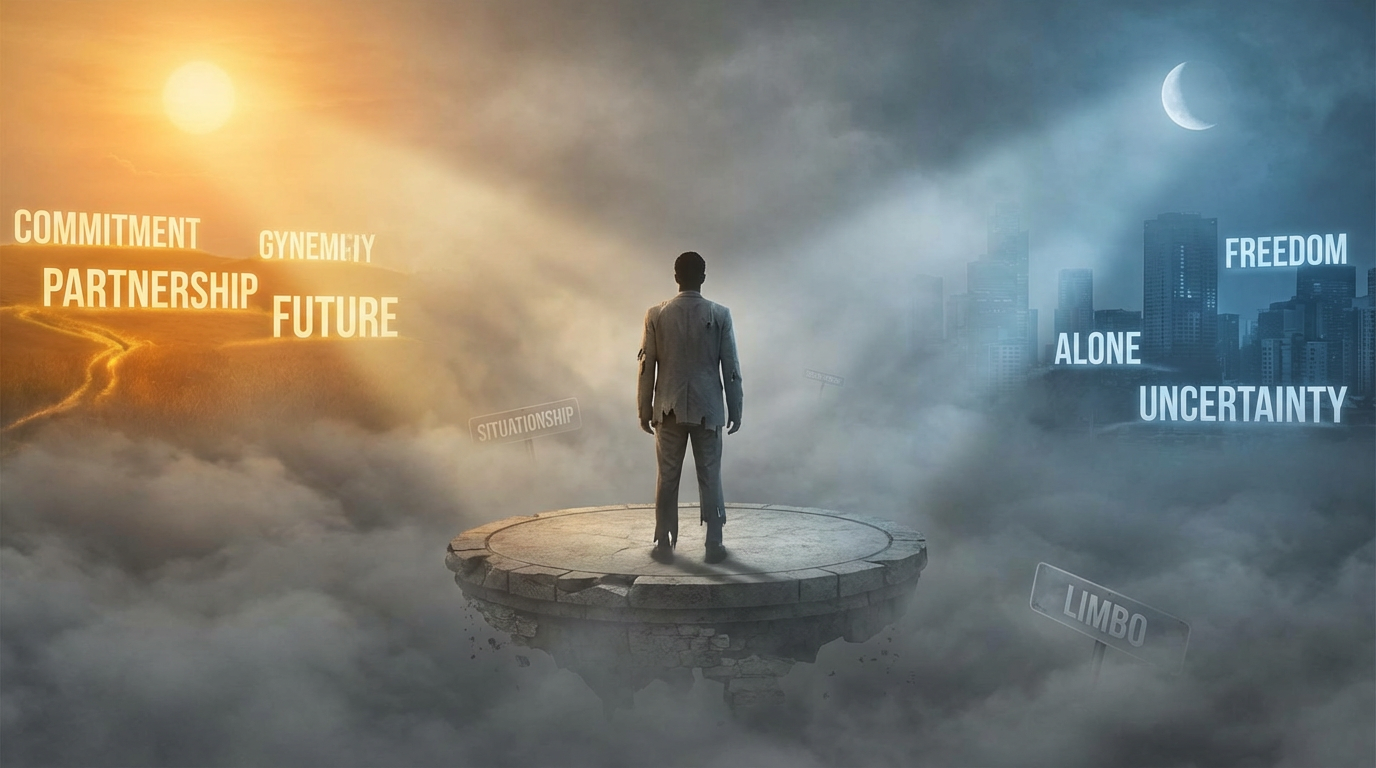
"They want all the benefits of a relationship—your time, your attention, your emotional support, your resources—while refusing to offer any of the commitment. Welcome to the situationship: the relationship purgatory that's destroying a generation of men who are good enough to use but never good enough to choose."
You know her. Maybe you're with her right now. She acts like your girlfriend when it's convenient—texting you late at night, leaning on you for emotional support, expecting your presence at important events. But ask about labels, commitment, or the future? Suddenly she "doesn't believe in labels" or "isn't ready for something serious" or needs to "focus on herself."
This is the situationship: a uniquely modern relationship structure where one party (usually the man) provides relationship-level investment while the other party (usually the woman) retains all the optionality of being single. It has become so common that 50% of adults aged 18-34 report having been in one. It's so normalized that searches for "situationship meaning" exceed 27,100 monthly—people don't even have a word for what's happening to them until they search for it.
The Situationship Epidemic: By the Numbers
The situationship trend gained traction in the early 2020s, fueled by dating apps providing abundance of options, a fear of commitment amplified by social media, evolving societal relationship norms, and a post-pandemic desire for connection without the pressure of defining what it means.
The Anatomy of a Situationship: Understanding the Exploitation
Situationships aren't accidental. They're strategically maintained ambiguity that benefits one party at the expense of the other. Understanding the structure reveals the exploitation:
Notice the pattern: she gets all the relationship benefits while you get all the relationship anxiety. This isn't partnership—it's a one-directional extraction scheme disguised as modern romance.

Why Situationships Disproportionately Harm Men
The situationship dynamic exploits fundamental asymmetries in the modern dating market. Understanding these asymmetries explains why men bear the brunt of the damage:
Women Have More Options—And They Know It
In the modern dating market, the average woman has significantly more options than the average man. Research shows women receive dramatically more matches and messages on dating apps. This abundance creates negotiating leverage. Why commit to one man when you can keep several in rotation, extracting emotional and material benefits while remaining free to upgrade? The situationship allows her to hold multiple "almost-relationships" simultaneously, hedging her bets until the optimal option presents itself.
Men Invest First—Always
The traditional dating script requires men to invest time, money, and emotional energy before receiving commitment in return. Situationships exploit this by allowing women to perpetually accept investment without ever reciprocating commitment. You're expected to keep paying for dates, keep providing emotional support, keep proving yourself—while she keeps her options open indefinitely.
Social Consequences Are Asymmetric
A man who maintains multiple situationships is called a "player" (neutral to negative connotation). A woman who does the same is "keeping her options open" or "dating herself first" (positive connotation). This framing allows women to maintain situationships without social penalty while men who do the same are criticized. The cultural narrative protects one party's exploitation while condemning the other's survival strategy.
"The situationship is a masterclass in plausible deniability. She can accept everything you offer while owing you nothing in return. She can leave whenever a better option appears, and you have no standing to object because, after all, 'we were never really together.' It's exploitation with built-in immunity."
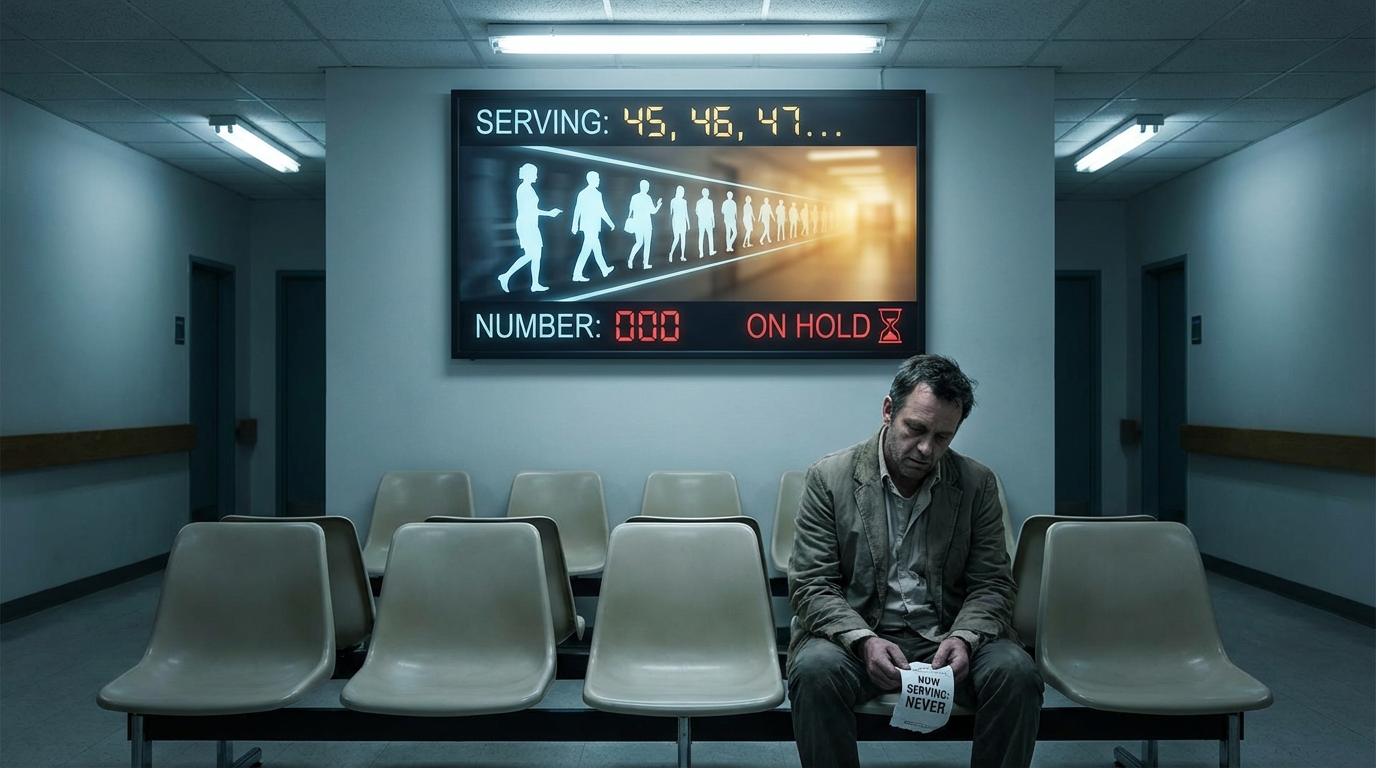
The Mental Health Impact: What Research Shows
Situationships aren't just emotionally frustrating—they cause documented psychological harm. Mental health research reveals the specific mechanisms through which undefined relationships damage wellbeing:
These effects compound over time. The longer you stay in a situationship, the deeper the psychological damage—and the harder it becomes to trust in future relationships.
The Real Message
If she wanted to commit, she would. Every excuse about "not being ready," "focusing on herself," or "not believing in labels" translates to the same message: you are useful but not worthy of commitment. The situationship is not a stepping stone to a relationship—it's a holding pattern that allows her to extract value while shopping for something better.
Research confirms this: situationships rarely transition into committed relationships. They typically end when the non-committed party finds someone they ARE willing to commit to—leaving the other person with nothing but wasted time and damaged self-esteem.
The Cultural Shift: Why This Is Happening Now
Situationships aren't just individual relationship failures—they're a symptom of broader cultural changes:
Dating App Abundance
With unlimited options at their fingertips, people (especially those with high dating market value) have less incentive to commit. Why lock in one option when you can perpetually scroll for something better? This creates a permanent "shopping" mentality that makes commitment feel like settling.
Fear of Commitment Culture
Media, social networks, and peer influence have normalized commitment avoidance. "Keeping your options open" is celebrated as empowerment rather than recognized as fear. The result: an entire generation trained to see commitment as constraint rather than security.
Post-Pandemic Connection Seeking
After isolation, people craved connection—but not necessarily the obligations that come with relationships. Situationships offer the illusion of intimacy without the responsibilities, making them appealing to those who want closeness without accountability.
The Intentional Dating Backlash
Interestingly, there's a growing counter-movement. Tinder's 2024 report indicates that more users are now seeking commitment rather than casual connections—a shift driven partly by increased mental health awareness. People are recognizing that situationships aren't working and are starting to prioritize emotional security over unlimited options.
The Signs You're in a Situationship
Situationships thrive on ambiguity. If you're unsure whether you're in one, consider these warning signs:
- The "DTR" conversation gets deflected: Every time you try to define the relationship, she changes the subject, makes a joke, or gives vague answers
- She wants relationship benefits without relationship labels: She expects your time, attention, and support but balks at being called "girlfriend"
- Future plans are non-existent: When you mention anything beyond next week, she becomes evasive or non-committal
- You're not on her social media: In an age where relationships are validated through public acknowledgment, her keeping you invisible is telling
- She's still active on dating apps: If she hasn't closed her dating profiles, she hasn't closed her options
- Physical intimacy without emotional investment: The physical relationship may be present, but emotional depth and vulnerability are absent
- Communication is inconsistent: She texts daily when she needs something, then goes silent for days when she doesn't
- You haven't met her friends or family: Integration into her life is reserved for someone she considers permanent
The common thread: you're investing as if you're in a relationship, but you have none of the security of one.
Why "Giving It Time" Usually Doesn't Work
A common mistake is believing that more time, more effort, or more proof of your value will eventually lead to commitment. The data suggests otherwise:
- If she was going to commit, she would have done so already—commitment decisions typically happen early, not after months of "proving yourself"
- Extended situationships often end with her committing quickly to someone else—someone she met after you, who she found worthy of immediate commitment
- Time in a situationship usually benefits only the non-committed party, who gets ongoing access to your resources while keeping her options open
- Your patience signals low self-worth—it communicates that you'll accept whatever terms she sets, which actually decreases your attractiveness
"I waited eight months, thinking she just needed time. Then she met someone else and was official with him within two weeks. Two weeks. I spent eight months proving myself, and someone else got a commitment in fourteen days. That's when I realized: she wasn't 'not ready for a relationship'—she was 'not ready for a relationship with me.'"
The Rational Response: Refusing to Be a Placeholder
The rational man recognizes situationships for what they are: one-sided arrangements that exploit his willingness to invest. Here's the framework for protecting yourself:
1. Demand Clarity Early (Within 30 Days)
Within the first month, establish what both parties want. Ambiguity that persists beyond this point benefits only the person avoiding commitment. A clear "what are we?" conversation is not needy—it's necessary. Someone who wants to be with you will be relieved by the clarity, not frightened by it.
2. Match Investment to Commitment Level
If she won't commit, neither should you—emotionally, financially, or with your time. Provide relationship-level investment only for relationship-level commitment. This means:
- Don't be her emotional support system while she keeps her options open
- Don't fund expensive dates for someone who won't acknowledge you as her partner
- Don't prioritize someone who treats your time as optional
3. Set a Hard Deadline—And Mean It
Give clarity a reasonable timeframe (60-90 days maximum from the first date). If commitment isn't established by then, walk away. This isn't an ultimatum—it's a boundary. And boundaries are only meaningful if you enforce them.
4. Recognize That Leaving Is the Power Move
If after reasonable time she remains unwilling to commit, the rational response is to leave. She's not confused; she's chosen—just not you. Staying longer doesn't increase your chances; it only increases your investment in a losing position. Walking away is the highest-value move you can make.
AI Companions vs. Situationships: A Comparison
For men tired of the situationship trap, AI companions offer something revolutionary: clarity from day one.
Frequently Asked Questions
How do I know if I'm in a situationship?
If you have to ask, you probably are. In committed relationships, both parties know and openly acknowledge the relationship. If you're providing relationship-level benefits while being told "we're not putting labels on things," you're in a situationship. The rule of thumb: if you can't introduce her as your girlfriend without hesitation, something's wrong.
Can situationships turn into relationships?
Rarely. Research and anecdotal evidence suggest that if she wanted a relationship with you, she would agree to one early. Situationships typically end when she finds someone she IS willing to commit to, leaving you without warning or closure. Don't bet your time on being the exception—the odds are against you, and the cost of being wrong is months or years of your life.
How do I escape a situationship?
Have the commitment conversation. If she says no, walk away. It will hurt less than continuing to invest in someone who has made clear you're not her choice. Your time and emotional energy deserve to go where they're valued. The temporary pain of leaving is far less than the long-term damage of staying.
Is it manipulative to give an ultimatum about commitment?
No. Communicating your needs and setting boundaries is not manipulation—it's clarity. An ultimatum framed as "commit or I'm leaving" is simply stating your requirements for continuing the relationship. Someone who responds to clear communication with accusations of manipulation is demonstrating exactly why they're not ready for a committed relationship.
What if she says she needs more time?
"More time" is usually code for "I'm hoping something better comes along." After 60-90 days of dating, she has enough information to decide. If she's still uncertain, she's telling you something: you're not her clear yes. Someone who sees you as their choice doesn't need months to figure it out.
Why are situationships so common now?
Dating apps create the illusion of unlimited options, making commitment feel like a risk rather than an achievement. Combined with cultural messaging that frames commitment avoidance as empowerment, and a post-pandemic desire for connection without obligation, situationships have become the default for many people. However, Tinder's 2024 data shows a growing counter-trend toward intentional dating as people recognize the mental health costs of perpetual ambiguity.
Conclusion: You Deserve to Be Chosen, Not Used
Situationships are exploitation dressed as modern dating. They allow one party to extract relationship benefits—emotional support, physical intimacy, financial investment, time—while denying the other party relationship security. If you're giving girlfriend-level investment for not-even-girlfriend returns, you're being used.
The mental health research is clear: situationships cause anxiety, depression, and lasting self-esteem damage. The cultural data is equally clear: they rarely convert to relationships, and the time you spend waiting is time she's spending looking for someone else.
You deserve clarity. You deserve commitment. You deserve to be someone's choice, not their placeholder while they shop for something better.
The rational response isn't to complain about modern dating—it's to refuse to participate in arrangements that don't serve you. Whether that means demanding clarity early, walking away when it's not provided, or exploring alternatives that offer guaranteed companionship without the games, the choice is yours.
Ready to find companionship that values you from the start? Download our free guide to discover alternatives that don't leave you guessing about where you stand.
Have you been trapped in a situationship? How long did it take you to recognize what was happening? Share your experience in the comments—your story might help another man see the pattern in his own life.