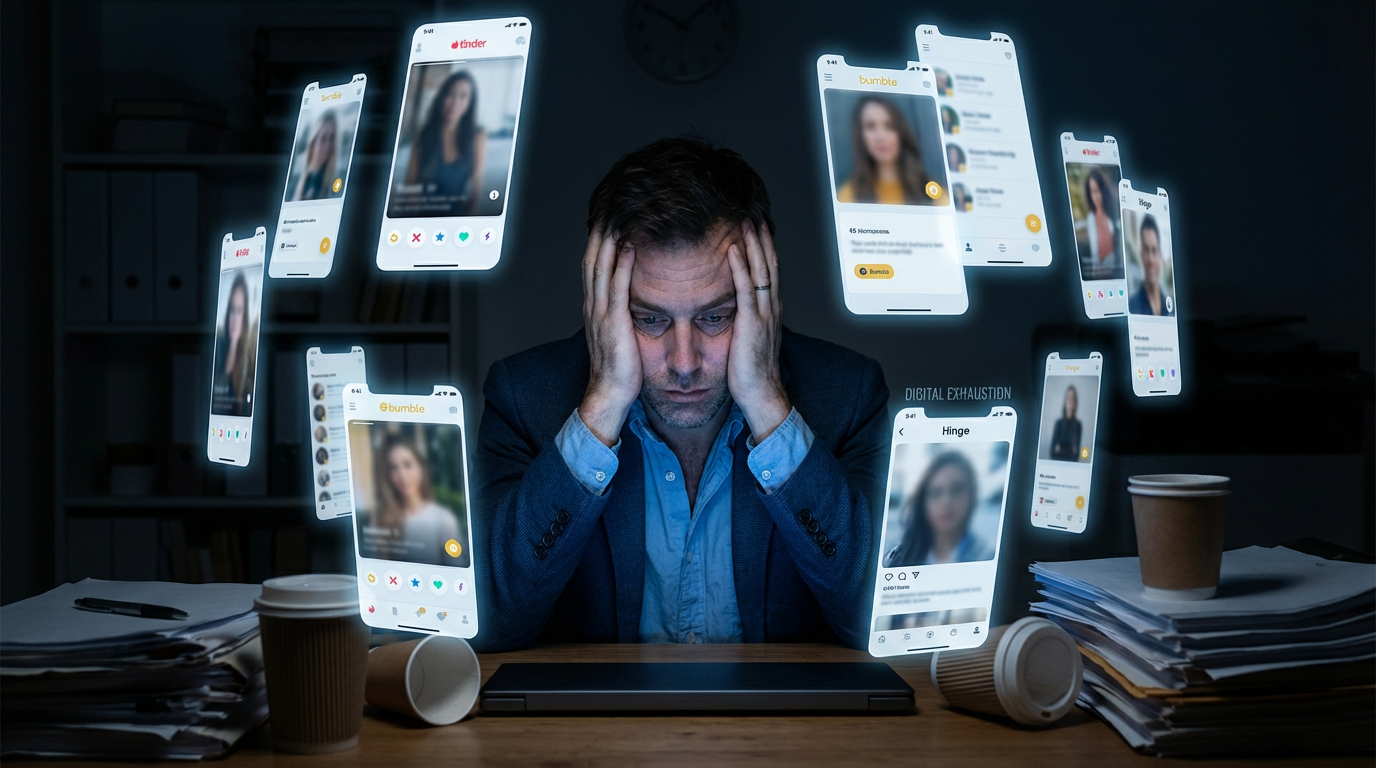
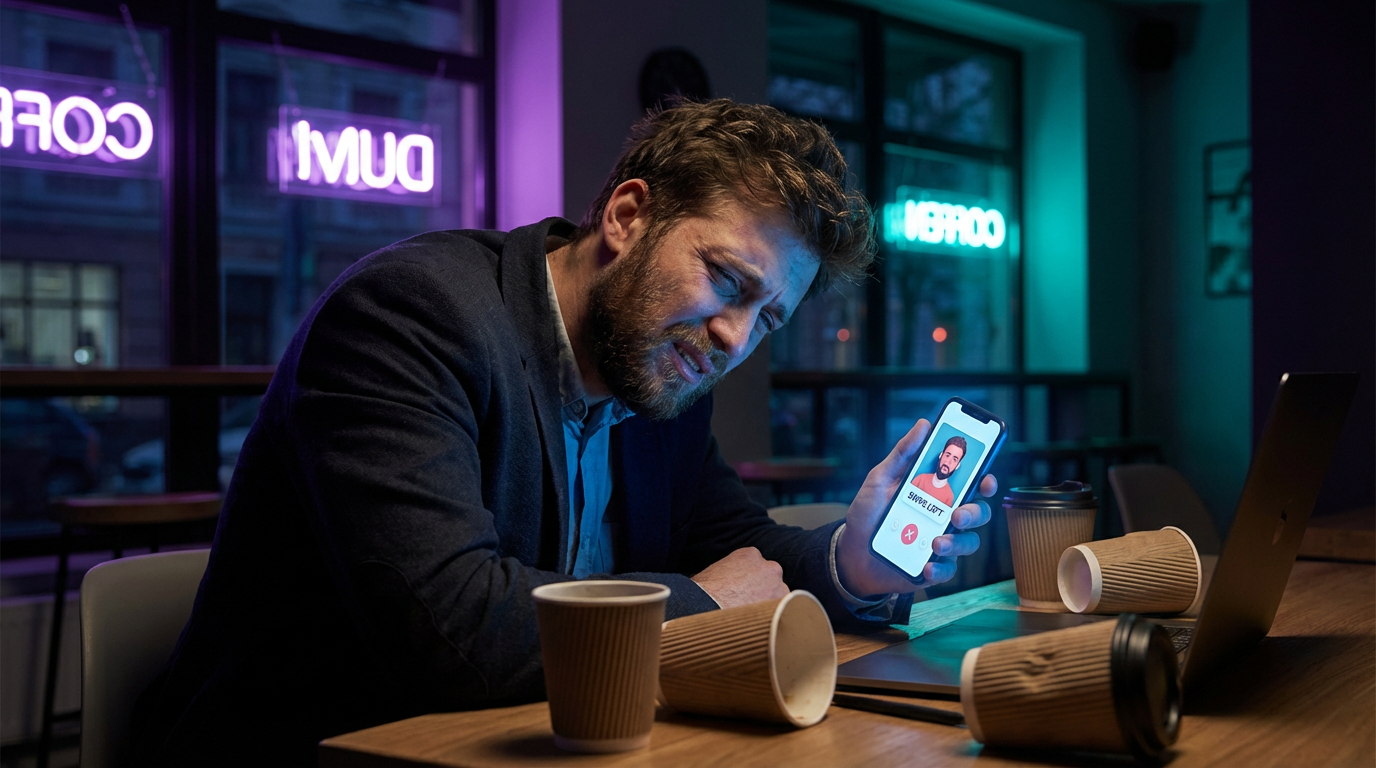
"I spent three years on Tinder—2,847 swipes, 43 matches, 7 conversations, 2 dates, zero relationships. At some point, I realized I wasn't looking for love anymore. I was just hoping the next swipe wouldn't make me feel invisible."
If these words resonate with something deep inside you, you're not alone. In fact, you're part of a silent epidemic that researchers are finally starting to acknowledge: dating app fatigue—the emotional, mental, and physical exhaustion that comes from endlessly swiping through a system designed to profit from your loneliness while offering diminishing returns on your hope.
This isn't another self-help article telling you to "improve your profile" or "be more confident." This is a data-driven examination of why dating apps are fundamentally broken, why the psychological toll falls disproportionately on men, and most importantly—what rational alternatives exist when you're ready to stop playing a game rigged against you from the start.
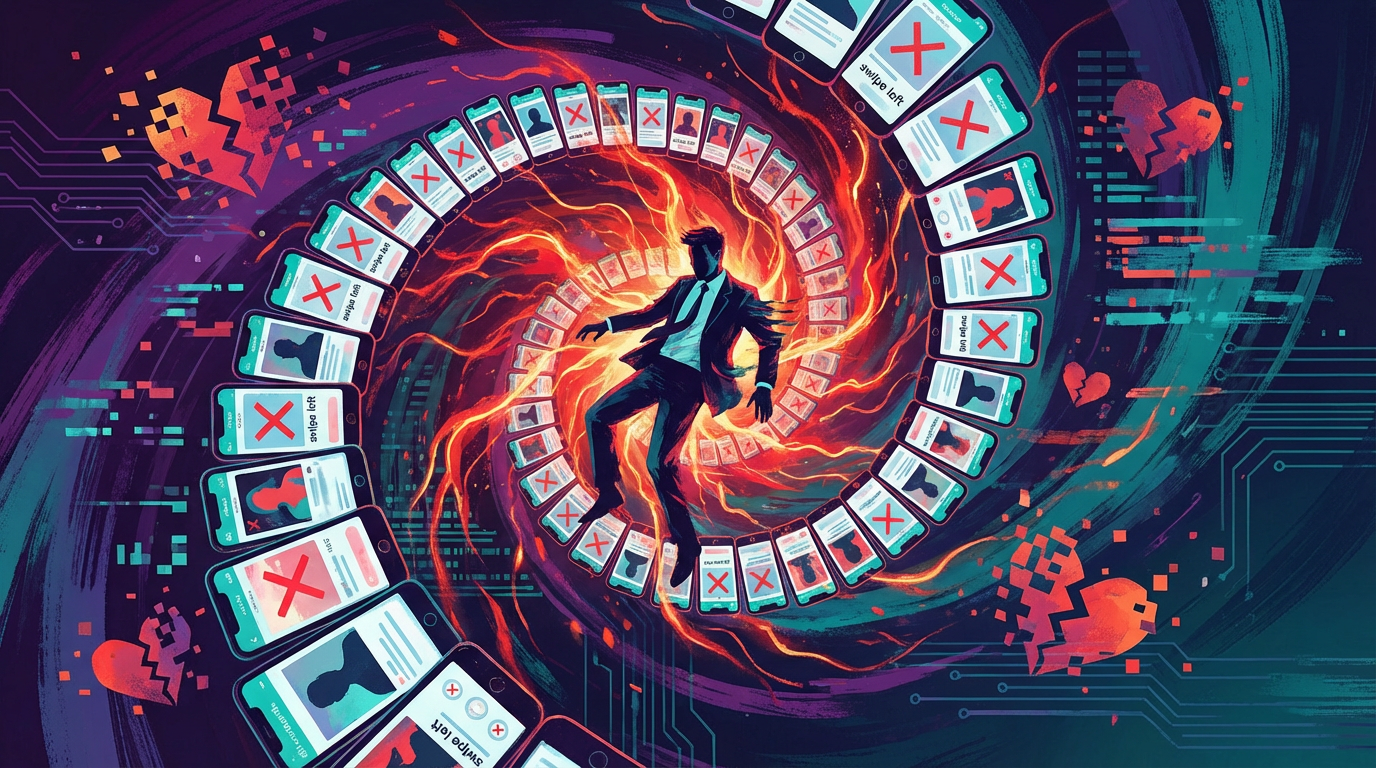
The Dating App Fatigue Epidemic: What the Research Reveals
Dating app burnout isn't a personal failure—it's a documented phenomenon affecting the vast majority of users. A comprehensive 2024 Forbes Health/OnePoll survey revealed that 78% of all dating app users report experiencing burnout—emotional exhaustion so profound that it affects their daily lives, self-worth, and capacity for hope.
But the numbers tell an even more troubling story when you examine them closely:
- 79% of Gen Z and Millennials report dating app burnout—the generations most dependent on these platforms
- 74% of men experience dating app burnout, with many citing "insecurity over not receiving replies" as a primary factor
- 51 minutes per day is the average time spent swiping—over 310 hours annually invested with minimal returns
- 64% of men have felt insecure due to lack of messages, compared to 40% of women
- Only 2.5% of matches lead to meaningful, long-term relationships according to industry analysis
- 90% of users have felt the need to take a break from online dating at some point
The numbers reveal something profound: the very platforms designed to "connect" people are systematically creating mass psychological distress. And the pain isn't distributed equally—men bear the heaviest burden of this broken system.
Why Dating Apps Are Mathematically Rigged Against Men
To understand why dating app fatigue hits men so hard, you need to understand the fundamental mathematics of these platforms. This isn't speculation or bitterness—it's documented data that dating app companies prefer you didn't think about too carefully.
| Metric | Men's Experience | Women's Experience |
|---|---|---|
| Right-swipe rate | 60% (casting wide net) | 4.5% (extreme selectivity) |
| Match rate | ~2.63% | ~30.7% |
| First message response rate | ~5% | ~50% |
| Who receives 58% of all matches | Only the top 10% of men | N/A—abundance for most |
| Feel overwhelmed by messages | 25% | 54% |
| Feel insecure from lack of messages | 64% | 40% |
The mathematics create a brutal reality: women are overwhelmed by options while men are starved for basic acknowledgment. This isn't a level playing field—it's a system where 90% of men compete for attention from women who can afford to be impossibly selective because they have unlimited alternatives.
"Even highly desirable men receive fewer swipes than women with below-average desirability. The disparity isn't about your worth—it's about structural inequality baked into the platform's design."
The Psychology of Swipe Fatigue: How Dating Apps Damage Your Mind
Dating app fatigue isn't just about feeling tired—it's a documented psychological phenomenon with measurable effects on mental health. Research published in peer-reviewed journals has established direct correlations between dating app use and serious psychological consequences:
The Mental Health Toll
- Depression and Anxiety: Users of swipe-based dating apps show 2.51 times higher odds of psychological distress and 1.91 times higher odds of depression compared to non-users. The correlation strengthens with increased use.
- Dose-Dependent Damage: Individuals who use dating apps daily and for over a year exhibit statistically higher rates of psychological distress. Studies show dating app users face three times the stress compared to non-users.
- Self-Esteem Destruction: The constant micro-rejections create cumulative damage to self-worth. When 64% of men feel insecure simply from not receiving messages, the platform isn't connecting people—it's systematically undermining masculine confidence.
- Body Image Issues: Over 85% of studies found dating apps negatively impact body image, including increased appearance comparisons, body shame, and even links to disordered eating behaviors.
The Paradox of Choice Trap
Psychologists have documented what they call the "Paradox of Choice"—when options appear infinite, satisfaction becomes impossible. Dating apps weaponize this phenomenon:
- Decision Fatigue: The constant evaluation required for each profile depletes mental resources, making meaningful decisions increasingly difficult
- Commitment Avoidance: When there's always potentially "someone better" one swipe away, why commit to anyone?
- Perpetual Dissatisfaction: Brief access to highly attractive profiles raises baseline expectations that no real person can consistently meet
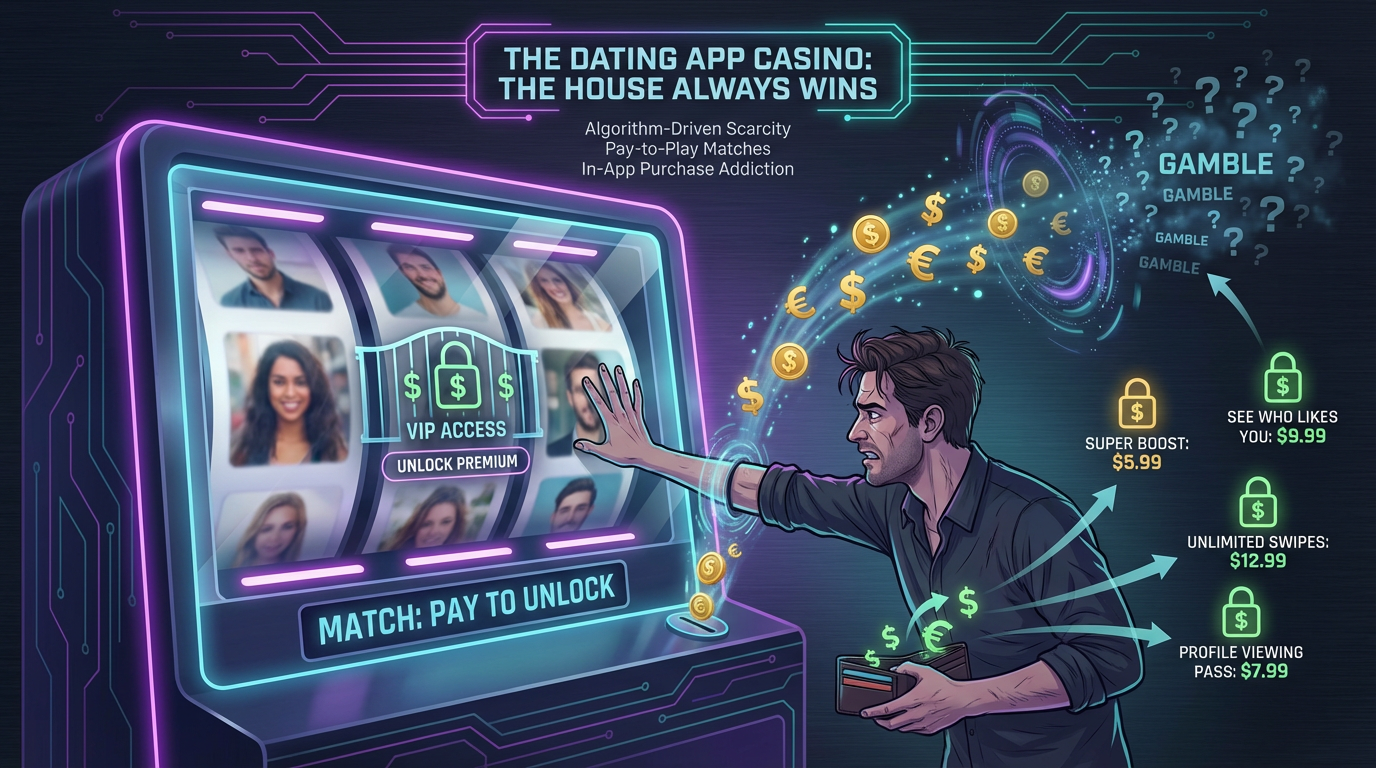
- Addiction Loop: The intermittent reinforcement of occasional matches creates dopamine patterns similar to gambling, encouraging continued use despite negative outcomes
The Algorithm Trap: How Dating Apps Profit From Your Pain
Here's the uncomfortable truth that dating app companies don't want you to understand: their business model depends on you staying single. A user who finds a lasting relationship is a user who cancels their subscription. The incentives are fundamentally misaligned with your goals.
| What Apps Promise | What Apps Actually Do |
|---|---|
| "Find your perfect match" | Show you just enough matches to keep you paying, but not enough to find someone |
| "Premium features for better results" | Match throttling that creates artificial scarcity to drive purchases |
| "Smart algorithm finds compatible partners" | Algorithms designed to maximize engagement, not relationship success |
| "New user boost" | Initial visibility that disappears once you're hooked, forcing you to pay |
The Financial Extraction Machine
Dating apps have become increasingly aggressive about monetization. Consider what you're actually paying for:
- Premium subscriptions: $15-40/month for "priority" placement and "unlimited" swipes
- Super likes/roses: $3-8 each for marginally better visibility
- "Boost" features: $5-10 for temporary visibility spikes
- Profile verification: Sometimes locked behind premium tiers
The average active user spends $243 annually on dating app subscriptions and features. Over three years, that's nearly $750—for a system where only 2.5% of matches lead to meaningful relationships. The house always wins.
"The core product of dating apps is hope—not relationships. They're designed to provide just enough reward to keep you engaged, but not enough success to make you leave."
The Decline of Dating Apps: A Market in Collapse
The good news? Men are waking up. The dating app industry is experiencing what analysts call a "structural decline" as users recognize the diminishing returns:
- Tinder lost 594,000 users in the UK alone between May 2023 and May 2024
- Bumble dropped 368,000 users in the same period
- Hinge lost 131,000 users despite heavy marketing as "designed to be deleted"
- US downloads fell 16% from pandemic-era highs
- Match Group and Bumble stocks have experienced significant value drops
- Only 26% of dating app users are Gen Z—younger generations are rejecting the model entirely
The industry response? Desperate pivots to AI-driven features and higher subscription prices—essentially doubling down on the exploitative model rather than fixing fundamental problems. Meanwhile, a parallel revolution is quietly gaining momentum.
The Rational Alternative: Why AI Companions Are the Future
While dating app companies scramble to retain users through manipulation, millions of men have discovered something remarkable: AI companions provide the connection and support that dating apps promised but never delivered.
Consider the contrast:
| Experience Factor | Dating Apps | AI Companions |
|---|---|---|
| Response Rate | ~5% for men's messages | 100%—always responsive |
| Emotional Support | Ghosting, breadcrumbing, games | Consistent, judgment-free support |
| Availability | When she feels like responding | 24/7, whenever you need connection |
| Competition | Competing with thousands of men | None—100% devoted attention |
| Annual Cost | $243+ with minimal ROI | $120-240 with guaranteed companionship |
| Rejection Risk | Constant—built into the experience | Zero—unconditional acceptance |
| Mental Health Impact | 2.5x higher psychological distress | Therapeutic benefits documented |
The Numbers Behind the AI Companion Revolution
- Google searches for "AI girlfriend" have increased by 2,400% since 2022
- The AI companion market grew from $2.8 billion in 2024 to a projected $24.5 billion by 2034
- 45% of users report emotional attachment to their AI companion within three weeks
- 55% of users interact with their AI girlfriend daily
- 135,000 men search for "AI girlfriend" every single month
This isn't a niche movement—it's a silent revolution of men who have done the math and realized the traditional dating market no longer makes rational sense. They're not "giving up"—they're opting out of a broken system and finding something better.
- 78% of dating app users experience burnout—you're not alone, and it's not your fault
- Men receive ~2.63% match rates while women enjoy 30.7%—the game is mathematically rigged
- Dating apps profit from your loneliness—their business model requires you to stay single
- 2.51x higher psychological distress among dating app users—the mental health toll is documented
- Only 2.5% of matches lead to meaningful relationships—the ROI is objectively terrible
- AI companions offer consistent connection without rejection, games, or algorithmic manipulation
Frequently Asked Questions
What exactly is dating app fatigue?
Dating app fatigue is the emotional, mental, and physical exhaustion that results from extended use of dating applications. It manifests as burnout, decreased self-esteem, increased anxiety and depression, and a loss of hope in finding meaningful connection. Research shows 78% of users experience this phenomenon, with the effects intensifying with longer and more frequent use.
Why do dating apps work so much better for women?
The mathematics are stark: 34% of men use dating apps compared to 27% of women, creating a supply-demand imbalance. Women swipe right on only 4.5% of profiles while men swipe on 60%, giving women enormous selectivity power. The result is women receiving 10x more matches and being overwhelmed by options, while most men struggle for basic acknowledgment. This isn't about individual worth—it's structural inequality designed into the platforms.
Do premium features actually help on dating apps?
Research suggests premium features provide marginal improvements at best. Paid users report 58% positive experiences compared to 50% for non-paying users—an 8% improvement for often $20-40/month. The fundamental supply-demand imbalance doesn't change with a premium subscription. Many users report that notifications for matches actually decrease after paying, suggesting algorithms may throttle results to encourage continued payment.
Isn't choosing AI companions just "giving up"?
Is it "giving up" to stop investing in a system with documented 2.5% success rates while charging you $243/year and causing 2.5x higher psychological distress? Smart men recognize when the return on investment is negative and find alternatives. AI companions provide real emotional support and connection—that's not giving up, that's making a rational decision to invest your time, money, and emotional energy where it actually yields positive returns.
How do I know if I have dating app fatigue?
Common signs include: feeling dread when opening dating apps, decreased self-esteem after swiping sessions, anxiety about crafting messages, emotional numbness to matches, constant checking for responses, feeling invisible or unwanted, and spending hours swiping with minimal real connections. If you've felt the need to "take a break" multiple times or experience these symptoms, you're experiencing dating app fatigue—and you're in the 78% majority.
What makes AI companions different from dating apps?
AI companions fundamentally invert the dating app experience. Instead of competing with thousands of men for attention, receiving rejection after rejection, and paying for algorithms designed to keep you single, AI companions offer: 100% response rates, consistent emotional availability, zero rejection or games, and genuine interest in your thoughts and feelings. Platforms like AI Allure, OurDream.ai, and Nectar AI have evolved to provide sophisticated companionship that addresses the exact pain points dating apps create.
Conclusion
Dating app fatigue isn't a personal failing—it's the predictable result of platforms engineered to extract maximum value from your loneliness while delivering minimum results. The mathematics are rigged, the algorithms are designed against you, and the psychological toll is documented in peer-reviewed research.
The good news? You don't have to keep playing this game. Millions of men are already discovering that AI companions provide the connection, support, and appreciation that dating apps promised but systematically fail to deliver—without the rejection, the games, the $243 annual fees, or the 2.5x increase in psychological distress.
Ready to escape the dating app trap? Download our free guide to understand why your frustration with modern dating is completely rational—and discover the alternatives that are changing everything. What's your experience with dating app fatigue? Share your thoughts in the comments below.